RV solar, batteries and 12-volt repair in Phoenix
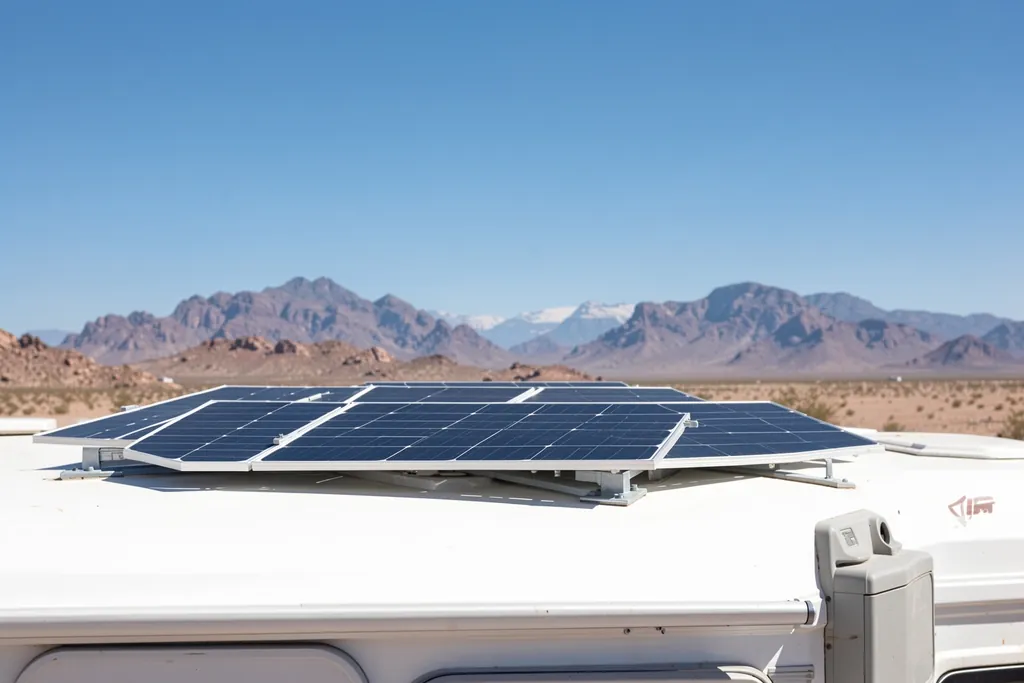
The Valley has about 300 sunny days a year, and in winter many owners leave hookups behind and camp in the desert. That makes solar here more useful than almost anywhere — and puts more strain on batteries, converters and wiring.
The tech drives out to wherever the RV sits — at home, in storage or at an RV resort.
Common problems
- Batteries go flat overnight
Old batteries, a small bank, or a hidden drain: an inverter left on, a propane detector, a stereo memory, a bad cell.
- Batteries don't charge on shore power
The converter, its fuses, or the shore power breaker.
- Lights dim or flicker
Low voltage, a loose ground, or a converter that isn't charging.
- Solar shows little charging
Dirty or shaded panels, a loose connection on the roof, a controller set for the wrong battery type.
- Outlets dead when not plugged in
The inverter is off, tripped, or wired only to some outlets.
- Inverter beeps or shuts off
Too much plugged in at once, or battery voltage sagging under the load. Note what was running when it stopped.
Check with a cheap meter
- Battery voltage, restingUnplugged and with loads off for an hour, a full lead-acid battery reads about 12.6–12.7 volts. Much lower means it's discharged or worn. Lithium batteries rest higher; check their maker's chart.
- Converter outputPlug in. A working converter usually brings the battery up into the 13s while charging. If it stays near 12, look at the converter's fuses first.
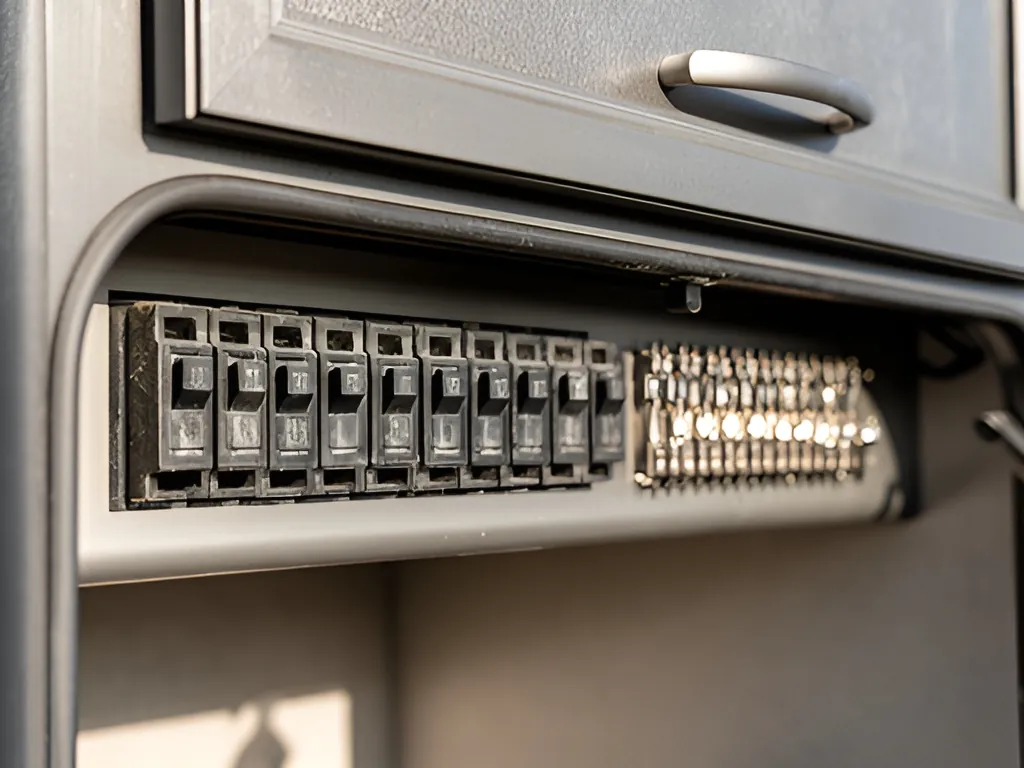
- Fuses and breakersMost power centers have 120-volt breakers on one side and 12-volt fuses on the other. Converters rarely have a reset button.
- Water in flooded batteriesHeat boils water out of lead-acid batteries. In summer check the levels more often and top up with distilled water.
- PanelsDesert dust cuts output. Rinse the panels when you rinse the roof.
Adding solar or lithium
A small system — a couple of panels, a charge controller and a better battery — keeps lights, the water pump, the furnace fan and devices going for days. Running the AC from solar takes a very large system and a big lithium bank.
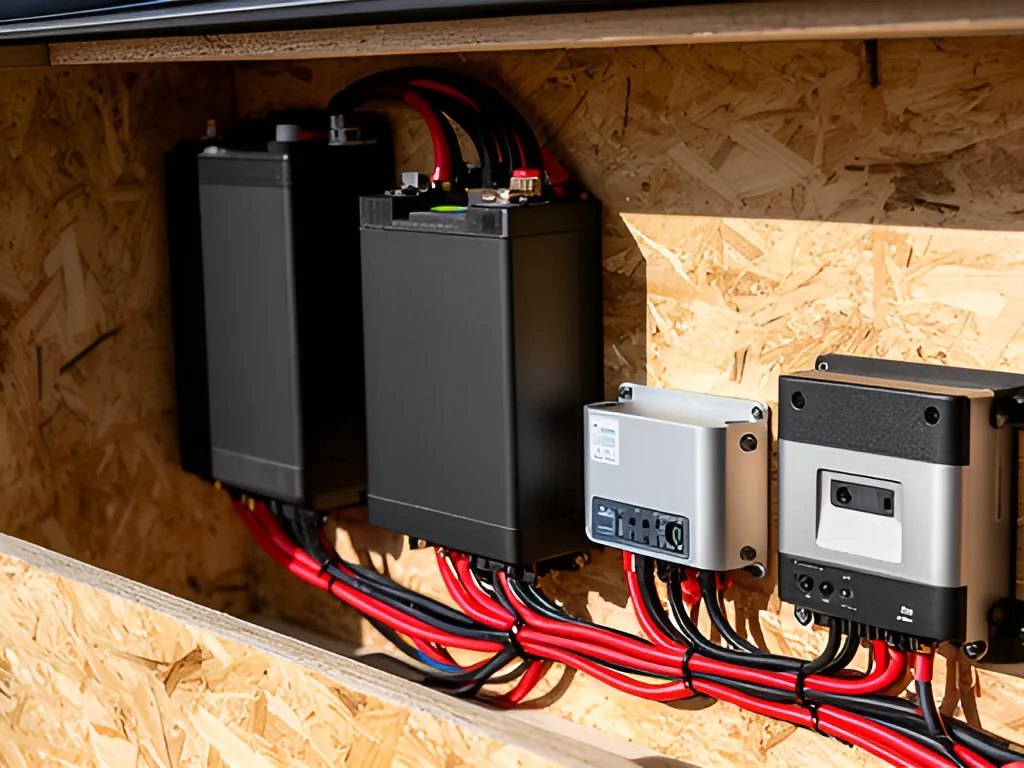
If you switch to lithium, the converter, the solar controller and the charging from the tow vehicle or engine all need settings or parts that suit lithium. A tech checks each one so the new batteries aren't undercharged or damaged.
Panels lose some output when they get hot, so a July noon on the roof gives less than the strong sun suggests. The long run of clear, mild winter days is when solar here earns its keep — and when most owners camp off the grid.
What a tech does and what it costs
For problems: a load test on the batteries, a parasitic drain test, converter and inverter output under load, and a look at every connection from the panels to the battery. For installs: sizing to what you actually run, roof mounting with proper sealing, a controller and fusing that match the batteries.
| Job | Usual cost | Where the number comes from |
|---|---|---|
| Parts for a 400-watt system | $975–2,150 | RV Inspiration, “RV solar installation cost”, 2026 |
| Professional installation of it | $500–1,500 | RV Inspiration, “RV solar installation cost”, 2026 |
| Technician's hourly rate | $140–200 | Micro-Air, “How much does it cost to replace an RV AC unit”, June 2026; Camping World, “RV Furnace Repair Cost Guide”, October 2026 |
Ballpark for 2026, not a quote. The technician sets the actual price after looking at your RV.
Batteries are the biggest swing in price, and lithium costs more than lead-acid up front. Repairs like a converter swap or a hidden drain usually come in at a few hours of labor plus the part.
Numbers last checked November 2026.
Owners also ask
How do I know if my RV converter is bad?
Plug in and measure the battery. If it doesn't rise above roughly 13 volts while plugged in, and the converter's fuses are good, the converter isn't charging. Dimming lights and 12-volt items acting up on shore power point the same way.
Is there a reset button on an RV converter?
Usually not. Check its 120-volt breaker and the reverse-polarity fuses on the 12-volt side of the power center.
Should the inverter be on all the time?
Only when you need 120-volt outlets off the battery. Left on, it uses power even with nothing plugged in.
Will 200 watts of solar run an RV fridge?
It depends on the fridge and the battery. A 12-volt compressor fridge draws power day and night, so 200 watts can be tight once you add lights, the pump and phones; a tech can size panels and batteries to what you actually run. A propane absorption fridge needs only a little 12-volt power for its board.
Get a mobile tech
Only your phone number is needed. Whichever tech picks up the job phones you.