RV roof sealant, coating and leak repair in Phoenix
In the Valley, roofs mostly fail from sun, not rain: the sealant around vents, the AC and the front cap dries, shrinks and cracks, and the first monsoon storm finds the gap.
The tech drives out to wherever the RV sits — at home, in storage or at an RV resort.
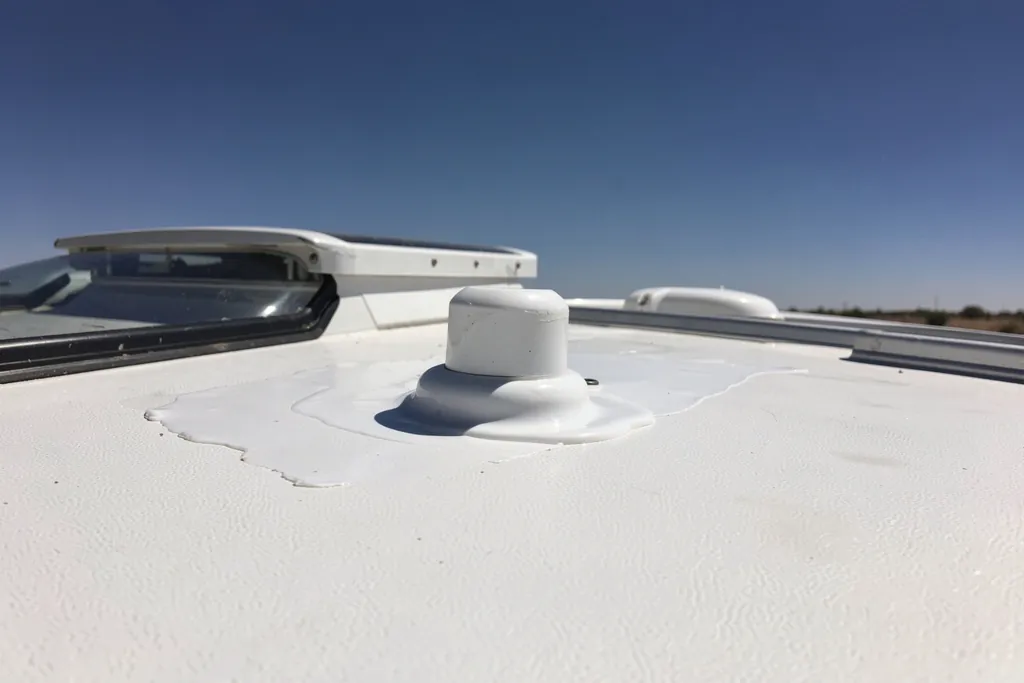
Signs the roof needs work
- Cracked or pulled-away sealant
Look around every vent, skylight, antenna and the AC, and along the front and rear caps. Cracks you can see are already letting water in.
- Stains on the ceiling
Brown rings near a vent or in a corner, or soft spots in the ceiling panel.
- Soft roof or bubbles in the walls
A spongy spot when you press, or bubbles in fiberglass side walls, mean water has reached the wood underneath.
- Chalky or torn membrane
Rubber roofs turn chalky in the sun; small tears happen from branches and hail.
Check it yourself — safely
- Look twice a yearRV makers ask owners to inspect roof sealant regularly, and some roof warranties depend on it. Before and after the monsoon is a good rhythm here.
- From a ladder firstMany roofs are not made to walk on. Check your owner's manual; if in doubt, look from the ladder at each corner.
- Go up in the morningAn RV roof in a Phoenix afternoon is too hot to kneel on, and sealants and coatings list the temperatures they can be applied at on the label.
- Know your roofEPDM rubber, TPO and fiberglass take different products. The label inside a cabinet or the manual tells you which you have.
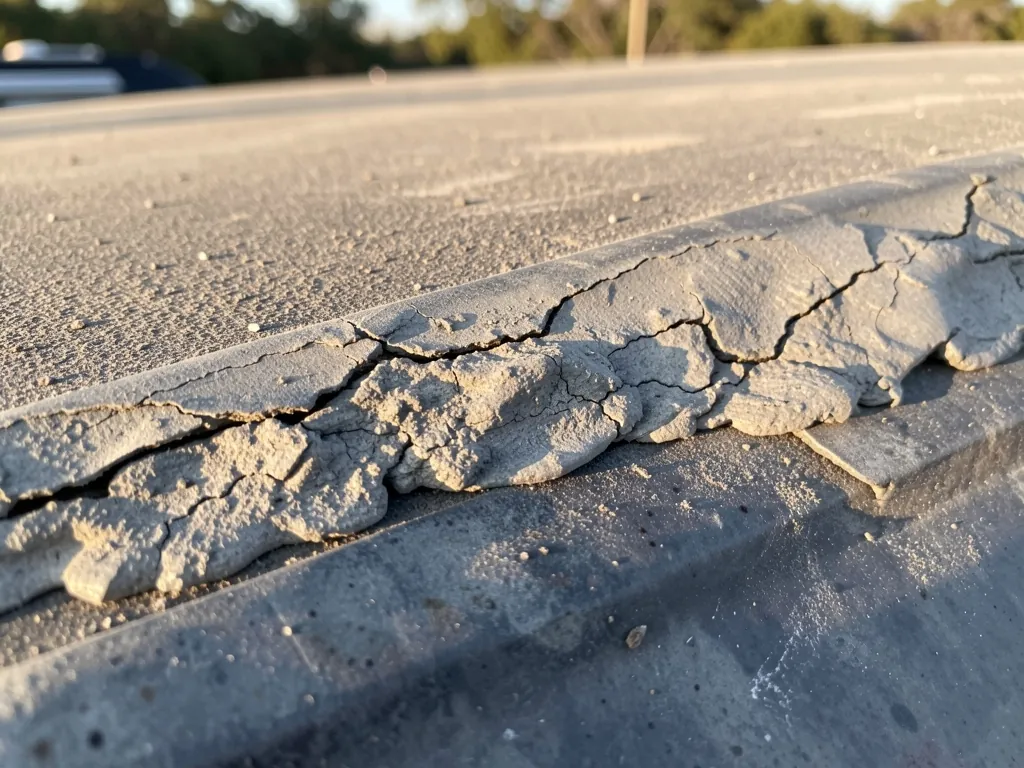
Sealant, coating or a new roof
Reseal. The tech scrapes off loose old sealant, cleans the area and lays fresh self-leveling sealant around fixtures and non-sag sealant on the vertical seams.
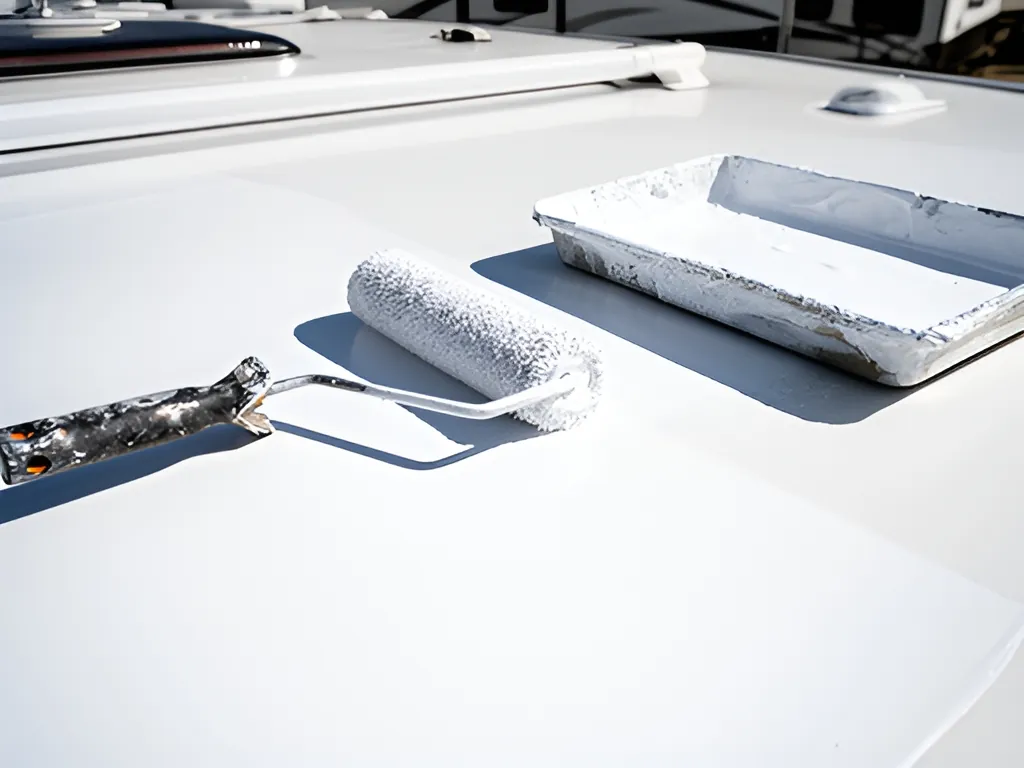
Coat. A white elastomeric coating over the whole membrane renews a chalky or worn roof and reflects sun. It needs a clean, dry roof and the right primer for your material.
Replace. When the wood under the membrane is soft, the membrane comes off, the damaged decking is replaced and a new membrane goes on. That's the expensive end.
More detail is in our guide to roof sealant and coating under desert sun.
What it costs
| Job | Usual cost | Where the number comes from |
|---|---|---|
| Patch small cracks | $200–800 | Jalopnik, “RV repair costs”, January 2026 |
| Fix a single leak spot | $150–700 | Camping World, ArmorThane and BossBros roof guides, 2026 |
| Full reseal | $400–1,500+ | Camping World, ArmorThane and BossBros roof guides, 2026 |
| New roof membrane | $175–230 per foot of RV length | Camping World, ArmorThane and BossBros roof guides, 2026 |
Ballpark for 2026, not a quote. The technician sets the actual price after looking at your RV.
Water damage under the membrane is what drives the price up. A small reseal now is much cheaper than decking later.
Numbers last checked November 2026.
Owners also ask
How often does an RV roof need resealing?
There's no single number; it depends on the sealant and how much sun the RV gets. Look at it at least twice a year and touch up any crack you find. In the desert, sealant usually wears faster than the calendar in the manual suggests.
Is Flex Seal OK for an RV roof?
Use only what your roof's maker approves. A product that isn't compatible with your membrane may not stick, can void the roof warranty, and makes proper repairs harder later.
What is the longest-lasting RV roof coating?
It depends on the roof material and prep more than the brand. A coating made for your membrane, applied on a clean, primed roof, lasts far longer than a premium coating over dirt.
Can a mobile tech reseal my roof at an RV resort?
Usually yes — resealing needs a ladder, not a shop. Check with the resort office about outside contractors first.
Get a mobile tech
Only your phone number is needed. Whichever tech picks up the job phones you.