RV AC repair in Phoenix
At 110° outside, a rooftop AC runs at its limit. Before you call, find out whether yours is broken or just losing to the heat — two readings with a kitchen thermometer will tell you.
The tech drives out to wherever the RV sits — at home, in storage or at an RV resort.
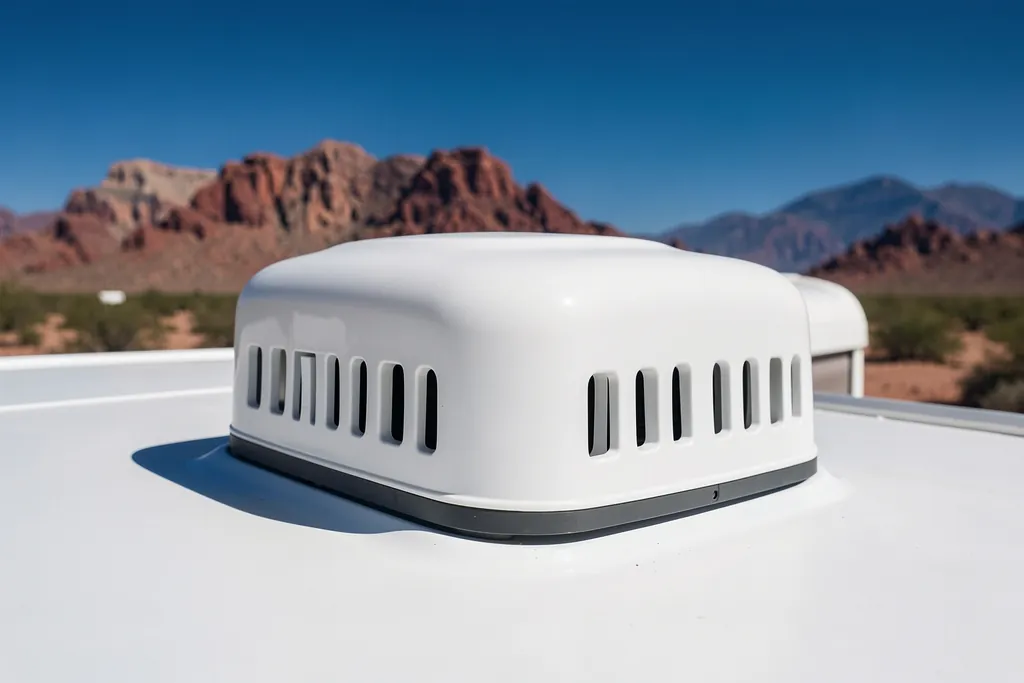
Broken or just hot? Check the temperature drop
Run the AC on Cool with the fan on High for 15 minutes. Then take two readings with any probe thermometer:
- the air going in — hold the probe at the ceiling return grille;
- the air coming out — at the vent closest to the unit.
Dometic and Coleman (Airxcel) say a healthy rooftop unit cools the air by about 16–22°F between those two points. In very dry air, like ours, the drop can run a few degrees higher. Sources: Dometic, quoted in RV Travel; Coleman Mach service manual, quoted on the Good Sam forum; Family RVing Magazine.
Signs the AC needs a technician
- Fan runs, air isn't cold
Air comes out but feels like room air. A failed start or run capacitor, a compressor that won't start, or coils packed with dust are the usual causes.
- Compressor clicks on, then off
You hear it start, run a few seconds and stop. Low voltage at the park pedestal, a weak capacitor or an overheated compressor can all do this.
- Ice on the ceiling unit or vents
Frost forms when air can't move across the cold coil — a clogged filter, the fan on Low, or a refrigerant problem.
- Breaker trips when the AC starts
A compressor pulls a big surge for a moment at start-up. On a 30-amp hookup, running it together with the microwave or the electric water heater element can trip the main breaker.
- Water dripping inside
The condensate pan or the seal between the unit and the roof has failed. Left alone, the drip soaks the ceiling.
- Loud rattle or grinding
A loose shroud screw, a fan blade touching its housing or a worn fan motor bearing. Switch it off before a blade breaks.
What to check before you call
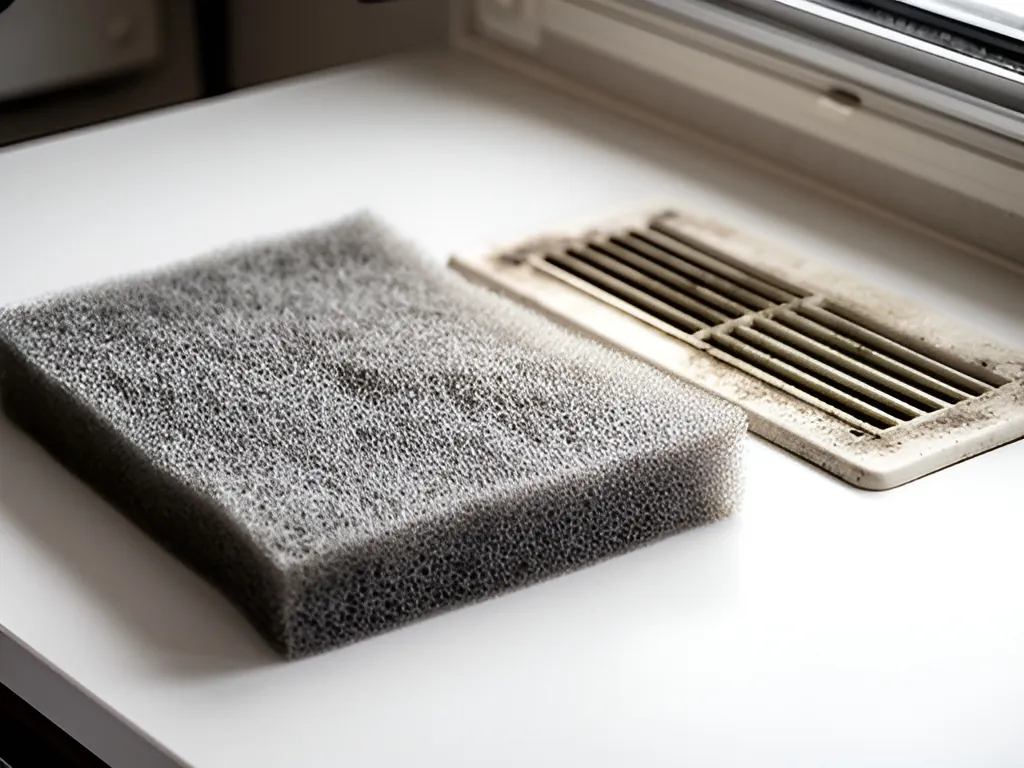
- The filterTake off the return grille on the ceiling unit and look at the foam filter. In dusty months it can clog in a few weeks. Rinse it in water, let it dry and put it back.
- The thermostatSet it to Cool, not Fan; the fan on High; and the temperature well below what the room is now.
- PowerCheck the AC breaker in the RV's 120-volt panel and the breaker on the campground pedestal. Most wall thermostats also need 12-volt power, so a flat house battery can keep the AC off.
- Park voltageIf you have a surge protector or voltage display, look at it while the AC starts. Low voltage makes compressors struggle and shut off — tell the park office and the tech.
- Sun and a head startKeep big windows out of the afternoon sun, use reflective window covers and close the blinds. Start the AC in the morning: Dometic notes it holds a cool temperature far better than it pulls one down at 4 p.m.
What the technician does
A mobile tech starts with power: voltage at the pedestal and at the unit, and the current the compressor draws when it starts. Then they test the capacitor, the fan motor and the compressor, clean the condenser coil on the roof and check the drain and the roof gasket.
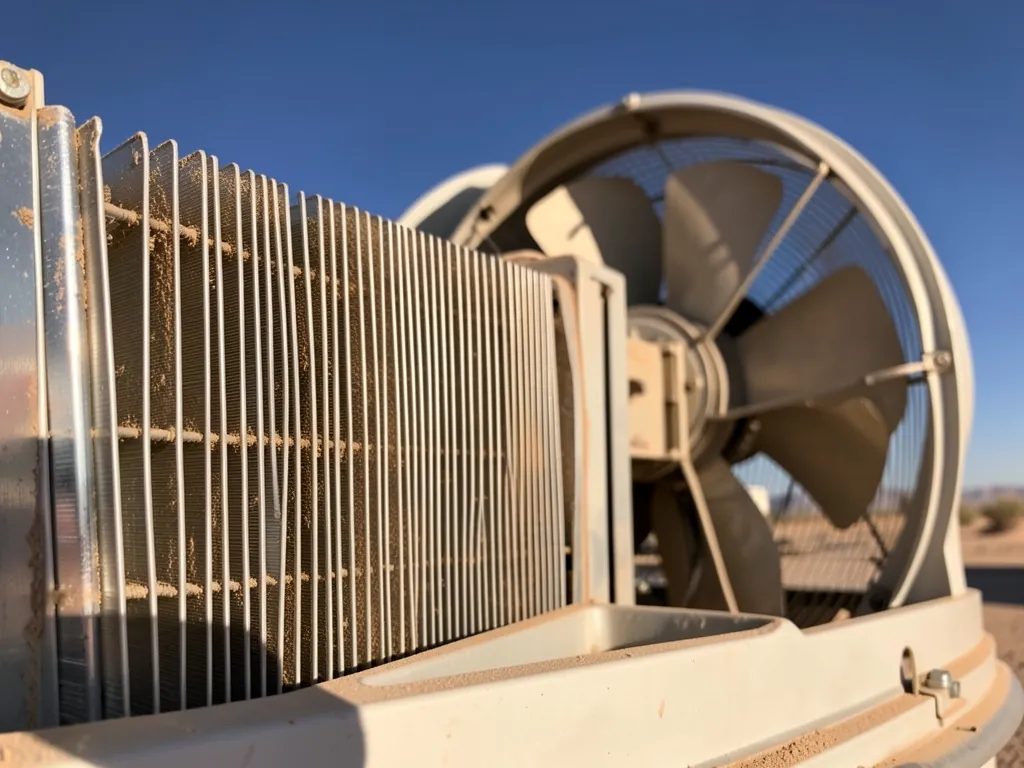
In Phoenix, summer dust and monsoon storms — the National Weather Service counts the season from June 15 to September 30 — pack that roof coil with fine dirt. A dusty coil can't shed heat, so the compressor runs hotter and cools less.
If the generator or a 30-amp hookup can't handle the start-up surge, the tech can add a soft-start kit. If the sealed system has failed, they will usually price a new rooftop unit for you.
What it costs
| Job | Usual cost | Where the number comes from |
|---|---|---|
| New run or start capacitor | $150–420 | Micro-Air, “How much does it cost to replace an RV AC unit”, June 2026; Camping World, “Mobile RV Repair Cost Guide”, July 2026 |
| Fan motor | $200–600 | Micro-Air, “How much does it cost to replace an RV AC unit”, June 2026 |
| New rooftop unit, installed | $800–2,500+ | Micro-Air, “How much does it cost to replace an RV AC unit”, June 2026 |
| Technician's hourly rate | $140–200 | Micro-Air, “How much does it cost to replace an RV AC unit”, June 2026; Camping World, “RV Furnace Repair Cost Guide”, October 2026 |
Ballpark for 2026, not a quote. The technician sets the actual price after looking at your RV.
These are US figures; we haven't found published prices for the Valley. The trip and the diagnosis are usually billed on their own — often a trip fee plus the first hour. Ask for both numbers when the tech calls.
Numbers last checked November 2026.
Brands you'll see on the roof
Most RVs in the Valley carry a Dometic unit (Brisk II, Penguin II, Blizzard NXT) or a Coleman Mach from Airxcel. Both come in 13,500 and 15,000 BTU sizes, and the heat pump versions also make heat on mild winter mornings.
Tell the tech the brand and model from the label on the ceiling unit or under the roof cover. It helps them bring the right capacitor on the first trip.
Owners also ask
Does an RV air conditioner need Freon?
Not as routine maintenance. Rooftop units are sealed at the factory. If one has lost refrigerant, there's a leak somewhere, and many technicians replace the unit rather than open it up.
How do I cool an RV when it's 110° outside?
Start the AC early, keep the sun off the windows, run the fan on High, cook outside and keep the door shut. Even a healthy single unit may not bring a long trailer down to 75° on a 110° afternoon — that's a size limit, not a breakdown. The temperature-drop check above tells the two apart.
Is it OK to run the AC all day?
Yes — that's what it's built for. Keep the filter clean and the fan on High, and give the compressor a few minutes before you restart it after a power cut.
Can I run the AC on a 30-amp hookup or a small generator?
One unit usually runs fine on 30 amps, just not together with other big loads like the microwave or the electric water heater. Small generators often stall on the start-up surge; a soft-start kit, installed by a tech, lowers it.
Get a mobile tech
Only your phone number is needed. Whichever tech picks up the job phones you.